In allocating our capital to our strategy's levers among the various value drivers, we need to consider the trade-offs between the resources available to us. The <IR> Framework categorises these resources into six capitals that are affected or transformed by the activities and outputs of an organisation. All our decisions seek to maximise positive outcomes and mitigate negative impacts.
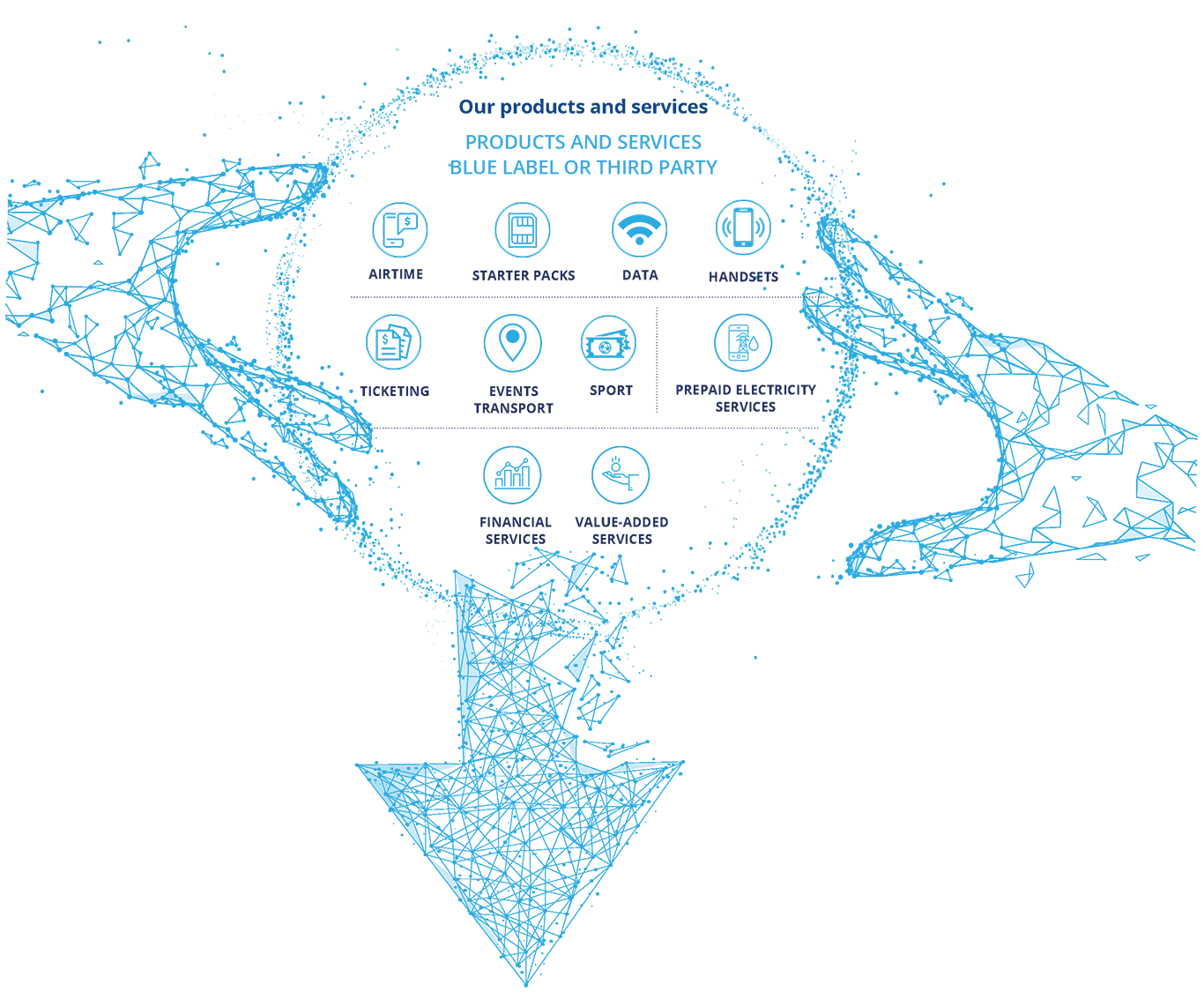
Blue Label is a mobile technology company that specialises in prepaid products and the electronic distribution of virtual merchandise and value-added services, including the full and seamless reconciliation of billions of nano transactions
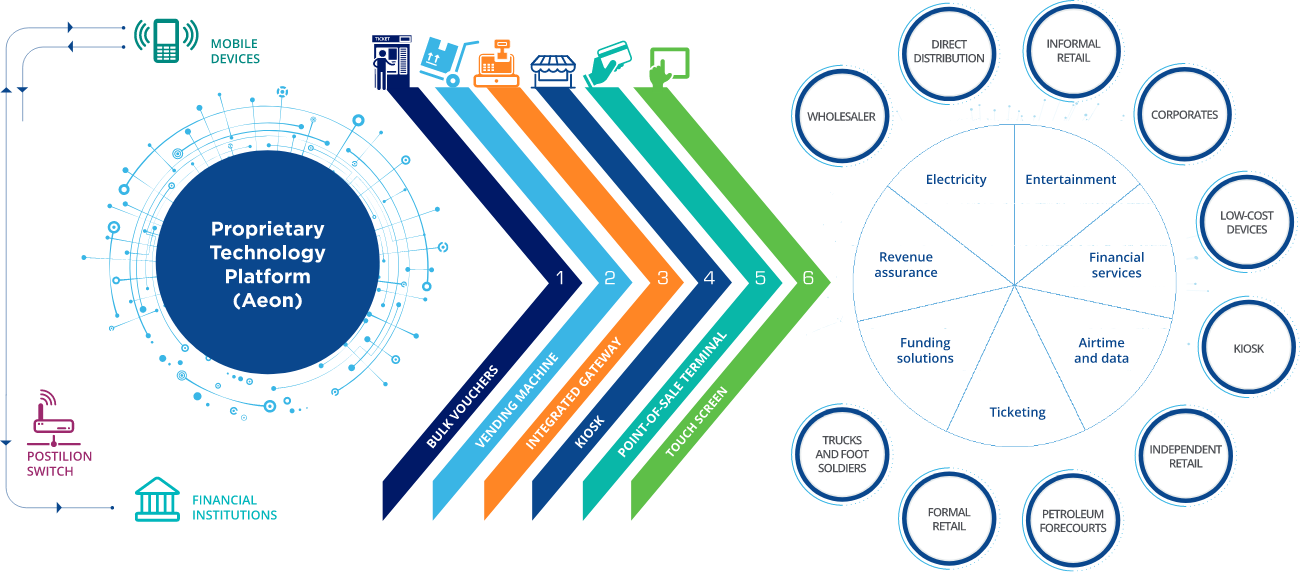
Our Company philosophy is to relentlessly drive financial inclusion for the mass market. We combine technical innovation with entrepreneurial flair to bring products and services associated with the developed world directly to the doorsteps of people who may be geographically and economically isolated from the mainstream. By doing so, we create jobs, support the growth of small businesses, and assist in bridging the digital divide.

Financial
capital
We leverage financial capital to invest in our business and to grow our competitive market position. This has a positive impact on the human, intellectual, and social and relationship capitals. We create jobs, support the growth of small businesses, and relentlessly drive financial inclusion for the mass market.
There is an important trade-off between short and long-term investment associated with financial capital. It is important to balance the interest of short-term benefits with those of long-term sustainable growth objectives. While both are important for different stakeholders at different times, it is a key focus in our strategic decision-making process.

Manufactured
capital
By investing in equipment, outlets and distribution capacity, we increase our manufactured capital, but negatively impact natural capital and, in the short term, financial capital.
Automation of routine tasks through technology may in the long term reduce human capital.

Intellectual
capital
Our technical innovation and entrepreneurial drive are central to effectively serving the unbanked market segment.
Improved investment in business processes and new systems is growing our intellectual capital and indirectly benefiting our human, and social and relationship capitals, but negatively impacting financial capital in the short term.

Human
capital
Significant people-related investments in initiatives decreases our financial capital in the short term, but positively impacts our human, and social and relationship capitals. Over the longer term, this enables us to have the people and capabilities required to deliver our strategy and performance targets.
In turn, our appeal as an employer of choice and our brand value increase our intellectual capital.

Social and
relationship
capital
Trusted, long-term partnerships with customers. Stakeholder-related investments reduce our financial capital in the short term but positively impact our social and relationship capital. Over the longer term, this enables us to have a community of stakeholders that are loyal and supportive to our brand and provide our social licence to operate.

Natural
capital
| 2022 | 2021 | Increase/ (decrease) in spend |
Increase/ (decrease) in usage |
||||
|---|---|---|---|---|---|---|---|
| R'000 | Usage | R'000 | Usage | (%) | (%) | ||
| Electricity (kWh) | 3 575 | 2 026 636 | 3 183* | 1 986 933* | 12 | 2 | |
| Water (kl) | 463 | 9 927 | 446* | 10 175* | 4 | (2) | |
| Petrol (l) | 10 042 | 484 921 | 7 321 | 486 130 | 37 | — | |
| Diesel (l) | 1 696 | 85 325 | 884 | 54 811 | 92 | 56 | |
| Paper (kg) | 183 | 8 614 | 127 | 5 836 | 44 | 48 | |
| * | The prior year numbers have been restated to exclude a duplication of electricity and water expenditure. |
With the emergence from Covid-19 lockdowns and the general increase in the cost of natural capital, we have seen an increase in the usage and cost of electricity, water, fuel and paper.The reduction in water usage is due to incorrect charging by the provider and subsequent corrections.
While certain business activities impact our natural capital (for example, use of fossil fuels and related emissions), these positively impact the human, social and relationship, and financial capitals.
We are aware of the environmental impacts of our operations and activities and focus on the responsible use of resources. Blue Label views digital products and services as having significant potential to deliver positive environmental outcomes.